

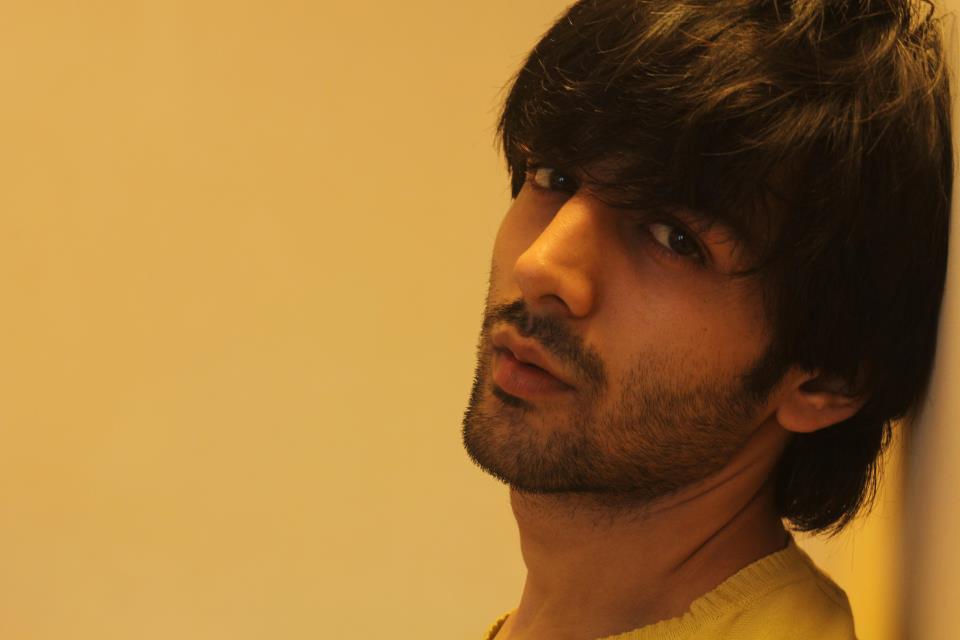
People feel that actors are public property, and they aren’t wrong: actors make a place in their life by being who they are, and they snuggle in so smoothly that they are but helpless to believe that they are a part of their life even though it were only a figment of their imagination. Alas, this, like everything else real, is really a thing of the past, unless of course we are to talk about some like Kartik Tiwari, who possesses the magic to conquer you wholeheartedly from the present produce of stars, provoking most effortlessly such a response in the masses of having people think him very much part of their lives.
For those still wondering who he is, well he
is a lad from Gwalior who arrived in Bombay to pursue his dreams of making it
as an actor, and fortunately he did make a place in the hearts of nearly
everybody with his splendid portrayal about women that has been arbitrated as
the finest, and also the longest monologue in the history of Indian cinema. Then
again, this is not a part of reportage meant for news dailies that has been
designed to sound in a fashion so as to promote his films, but a slice from the
life of both Kartik and us, more akin to a mirror of the real self behind the
reel that you know of him.
When I watched his film Pyaar Ka Punchnama
– an honest portrayal of life in its truest and yet assorted shades, the
character of Rajat stayed with me. The world being as small as it is, I could
have obtained his number from my high and mighty friends from the Bombay film
industry, but instead of doing that I sent him a note of appreciation and was
delighted to hear from him the following day. Without much prod we struck an
amiable rapport and found ourselves communicating on a regular basis from then on.
More than anything else what we shared was humour, and that’s when I realised how
important humour was indeed as a binding and furthering factor in friendship. In
time, I wanted to write something on him and whenever I expressed such a
desire, he would laugh it away and my mood too would then fizzle, not until my
eyes fell upon the image of him holding his dog (whom I gathered had passed
away) that I felt was the right time to write on a friend who had made a huge
difference in my life simply by being who he was: kind, loving, honest,
sensible, intelligent, instinctive and also impulsive at times, but above all
someone I knew and trusted blindly.
One would agree, I suppose, that at some
stage in life we have felt that we do not know what it is really about people
that the moment we glance at them we feel this instant connection. And like I
mentioned earlier, this connection seems even stronger for millions of people considering
that the person in discussion was in the public eye, the difference being, and I
noticed it right at the beginning with this boy, that he had an uncanny ability
to reach out to make sure that everyone who wrote to him received a warm and personal
note of gratitude establishing this comfortable connection with them at once, which
was so very uncommon in today’s stressed and time-pressed society. That is when
I began to pay attention to some of his words, as they are the soul of the mind,
and relished some of his remarks while he advised the youth to indulge in
sports than being glued to social media, or the times when he wished people a
safe and sensible Diwali, not forgetting to recommend that they ought to eat healthy
and live healthy if they cared for the prosperity and well-being of their near
and dear ones. This in accompaniment with much more sparked something off in me and I embarked on a little experiment where I showed people a picture of
Kartik and asked them what they thought of him, and the reactions I was met
with follow –
Vikram, a self-proclaimed critique of Indian
cinema asked, “Is this the guy from that movie Pyaar Ka Punchnama?” When I
nodded, his response was, “There’s something naughty behind that smile: like a
mischievous side. In the movie he was doing the role of a supressed individual
which he is not. I think there is so much competition but he was lucky to get
the right break.” Appreciation from a person who normally shredded actors with
his wry words was like music to my ears.
The next individual was Swetha, a sparkling
and socially secure woman from the crème-de-la-crème of the Bangalore society.
She studied his photograph with intent and said, “He is cute.” She then paused,
gave it a second look and went on, “It strikes me more than anything that he seems
quite friendly and has a warm smile to match. I think he is entirely into
fitness and I also think that he loves dogs. A man who loves dogs will never
ill treat his woman and such a man is any woman’s dream,” said she, stopped,
blinked curiously and asked, “But who is he?” I smiled and changed the topic.
The third person I presented his picture to
was Neha, an urbane model, who having finished her chartered accountancy
recently, was currently pursuing her law. She loved, particularly among many
others in cinema, Matthew McConaughey. Her instant feedback; “He’s likeable. Carefree.
Has a thick mop of hair. A perfect smile I must say and a very pleasant face. He
also has this almost cherubic innocence that very few possess. If I were to
describe him in one word he is love,” she paused and asked, “I hope I am making
sense?” I nodded. “By the way who is this good looking young bloke?” she
queried. I smiled at her and before I could change the subject she exclaimed,
“Oh yes. I’ve seen his film. It was good. He was good. I hope he does well
because he has that extra edge that many others don’t, to touch people with who
he is as a person than merely an actor on the screen.”
While some of you might question the
purpose of such an undertaking, or even think that I have offered nothing novel
that cannot be found online on him from his unending list of fans, I would only
confess that my intention was merely to observe what people thought of him the
moment they looked at him, and if you realised it didn’t matter to anyone really
that he had an enigmatic public persona. It didn’t matter too whether the women
found him cute, or the guys thought him cool – what mattered ultimately was his
personality, what was within him: his heart and his soul, and the fact that he held
the capability and capacity to inspire a change in you not by ‘asking you to
change’ but by behaving in a manner so as to make you look up to him and make
you want to be like him inward, outward, had me succeeded in my endeavour to represent
him such in my own eyes.
The final cherry on the pie was the man
himself. When I informed him about what I had been doing, albeit briefly, he
thanked me profusely in his customary politeness and then dissolved into a
laugh. I made a face and expressed, “I’m serious and you’re laughing, Koki?” He
laughed even more and spoke most shyly, “Yea. Yea. I know.” I followed that up
with, “Only the insecure get carried away by popularity. The humble bow their
head with humility and thank life for giving them what they truly deserve: a
trait one rarely sees these days. It is a given that people have become
transitory and shallow, and when you chance upon a gem in the rubble, you don’t
quite need to point to it, the sheen automatically gets one to take note of it.
So people like you, Koki, make people better by who they are, and the least we
can do is love and cherish them with all of our hearts.” I stopped and asked
him to wipe away the smile from his countenance for which he chuckled and
declared instantly, “I ain’t that good though.” I smiled and said, “That’s what
all the good ones say!” He laughed from the depth of his heart as I further added,
“The proud one’s think they are good and that’s where the downfall begins. So…”
He said nothing and didn’t have to say anything as well. I imagined what he was
thinking and that was the hallmark of a hero, a real hero – our very own Koki
and your very own Kartik.

